
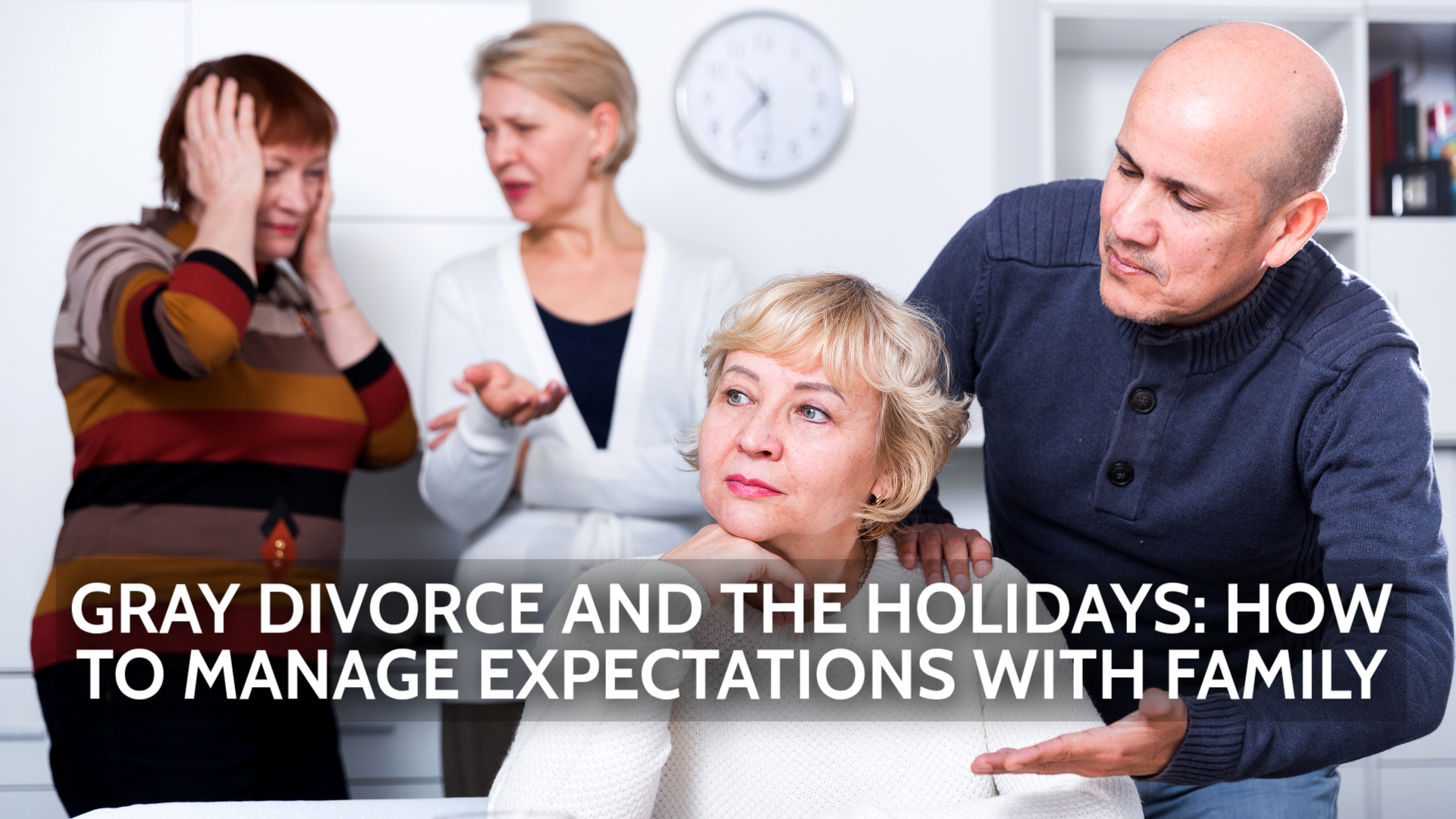
Gray divorce—divorce occurring after age 50—comes with its own emotional and financial challenges. Adding Thanksgiving, Christmas, and New Year celebrations into the mix can amplify stress and pressure, especially when extended family has expectations about how the holidays “should” look.
If you’re navigating gray divorce holiday stress, you’re not alone. Many adults in long-term marriages struggle with how to communicate with adult children, handle gatherings, and protect their peace during a contentious divorce. This guide helps you create boundaries, set realistic expectations, and approach the season with clarity.
Why the Holidays Feel Harder During Gray Divorce
The emotional strain is often rooted in the history you carry—decades of traditions, routines, and memories. Many people experiencing gray divorce feel a deeper sense of loss because:
- Family traditions were built over many years
- Family members have strong expectations
- Adult children may struggle more with parental divorce than younger children
- Social circles often overlap, making gatherings feel awkward or tense
Understanding these dynamics helps you approach the season without guilt.
Communicating With Adult Children During a Contested Divorce
Adult children may feel caught in the middle during a high-conflict situation. Your goal should be clarity and reassurance—not oversharing.
Here are healthy communication principles:
- Be honest without discussing legal strategy
- Avoid blaming the other parent
- Reassure children you don’t expect them to “pick sides”
- Offer options if holiday plans need to change
The tone you set now will influence how holidays feel for years to come.
Managing Holiday Stress While Protecting Your Emotional Energy
Gray divorce often brings additional pressures: financial uncertainty, health concerns, caring for aging parents, and redefining long-term life plans. These pressures don’t pause for the holidays.
To reduce overwhelm:
Choose Fewer Obligations
You don’t have to attend every event. Declining gracefully is better than pushing yourself into emotional exhaustion.
Set Boundaries in Advance
If family members tend to pry or criticize, consider preparing responses ahead of time to protect your emotional space.
Pause Before Making Major Decisions
High-conflict divorce combined with holiday stress can impair judgment. Give yourself breathing room for big decisions.
Creating New Traditions as You Enter a New Season of Life
One benefit of gray divorce is the opportunity to redefine what the holidays look like for you. New traditions don’t have to replace the old ones—they can complement them.
Consider:
- Hosting a smaller, relaxed gathering
- Traveling instead of staying home
- Volunteering
- Creating traditions centered around friends instead of family
The goal isn’t reinvention—it’s alignment.
How to Handle Social Pressure
People often make assumptions or ask intrusive questions. You don’t owe anyone explanations.
A simple script might help:
- “It’s been a big year, and I’m focusing on peace right now.”
- “We’re still working through the process, but I’m doing okay.”
Short, calm responses discourage further probing.
When to Seek Additional Support
Because gray divorce often involves long-term financial entanglements—retirement accounts, health coverage, real estate—it’s wise to involve professionals early.
An attorney can help you:
- Prepare for financial negotiations
- Understand how holiday timing affects the case
- Protect assets acquired over decades
Support systems protect your mental and emotional health during the process.
Frequently Asked Questions
1. Why is gray divorce more emotionally challenging during the holidays?
Long-standing traditions, shared memories, and adult children’s expectations increase emotional strain.
2. Should I still attend gatherings with my spouse while the divorce is pending?
Only if it doesn’t compromise your mental wellbeing. It’s okay to decline.
3. How do I handle adult children who want all of us together “one last time”?
Be gentle but firm. You can validate their feelings without putting yourself in a painful situation.
4. Is it normal to feel guilty?
Absolutely. But guilt doesn’t mean you’re making the wrong decision. Counseling or support groups can help.
Helpful External Resources
- Psychology Today – Managing holiday stress
- NIH – Mental health and life transitions: https://www.nih.gov