
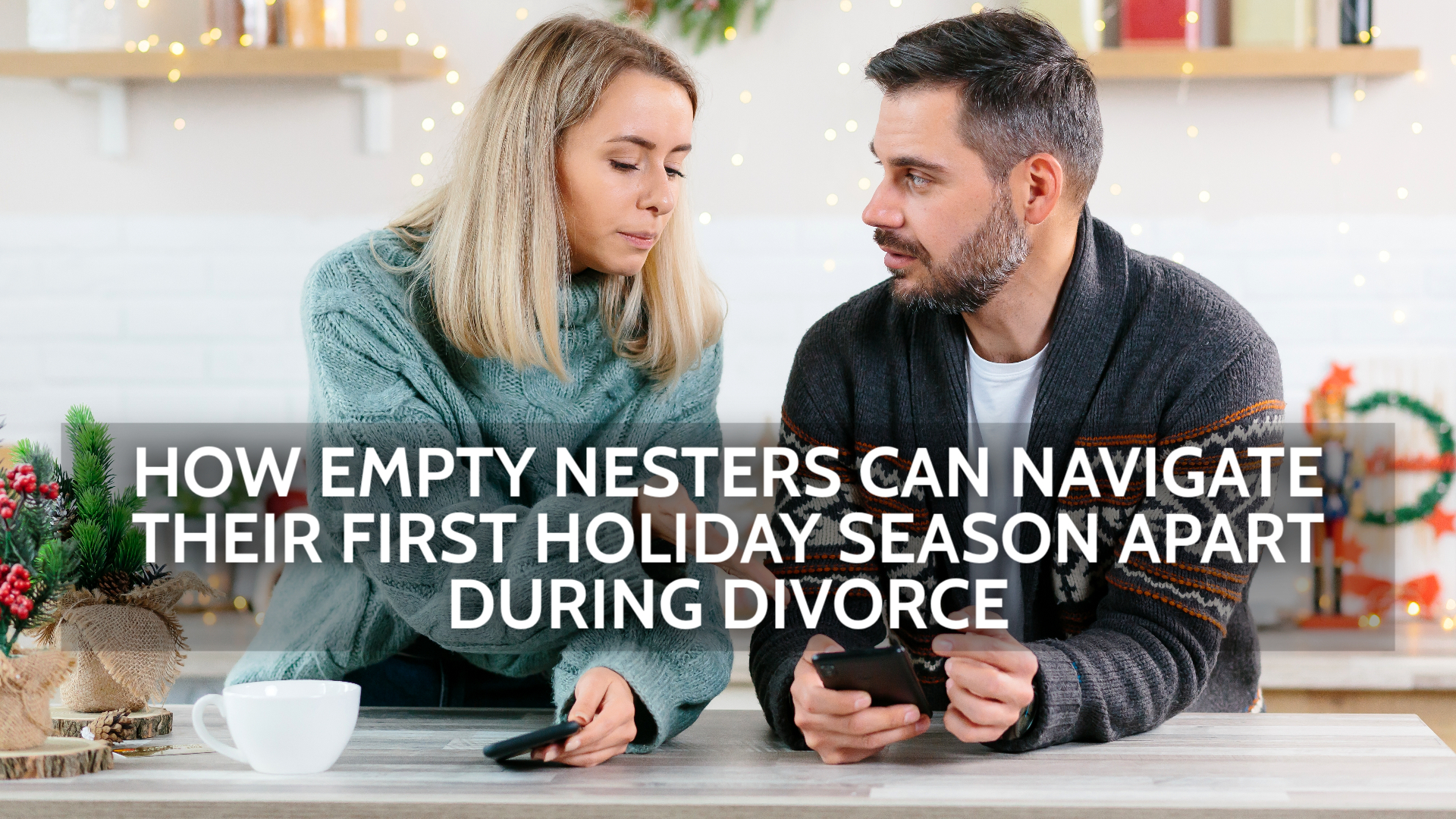
The first holiday season facing divorce after the kids move out—often brings an unexpected wave of emotions. Empty nesters are in a unique position: you’ve already experienced one major life transition when your children left home, and now you’re facing another as you move toward divorce. The combination can make November and December feel heavy, lonely, or uncertain.
But you’re not alone. Many couples in long-term marriages choose to separate later in life, and with thoughtful planning and emotional preparation, you can get through the season with clarity and stability. This guide offers practical steps for navigating the holidays during divorce after the kids move out, and how to protect both your peace and your future.
Understanding the Emotional Shift of Holiday Traditions
For many empty nesters, holiday traditions revolve around their children—where they come to visit, which meals they expect, and the rhythm of the week. When a marriage is dissolving, even the most long-standing traditions can suddenly feel fragile or uncertain.
This emotional disruption happens for three reasons:
- Identity Shifts — You’re no longer needed as “the holiday host,” and you may also be transitioning out of the identity of “spouse.”
- Family Logistics Change — Adult children may now split time between households, or avoid choosing sides.
- New Loneliness Appears — The quiet home that felt peaceful after the kids left can feel emotionally heavier when divorce is added to the mix.
Understanding why the season feels different allows you to approach it with more grace and less self-blame.
Practical Steps to Navigate the Holidays With Stability
The most stressful part of holiday-season divorce is often not the legal process—it’s the emotional and logistical change. A few practical strategies can make the transition smoother.
1. Create a Plan for How You’ll Spend the Holidays
Even if your divorce is uncontested, you should consider making a clear plan for how you’ll handle the holidays this year.
Think through:
- Where you’ll spend the holiday
- Whether you and your spouse will attend events together
- How adult children will divide time
- Whether new or separate traditions should be introduced
A loose but intentional plan reduces last-minute anxieties.
2. Communicate Expectations With Children
Adult children often feel pressure to “choose sides” without being asked. A simple conversation can release them from emotional responsibility.
Let them know:
- They don’t need to mediate
- You support them spending time with both parents
- You’re still a united family, even if things look different now
Healthy communication sets the tone for future holidays as well.
3. Give Yourself Space to Feel What You Feel
Many empty nesters feel guilt, embarrassment, or grief. These emotions are normal. Studies on life transitions show that major changes—like becoming an empty nester or going through a divorce—trigger the same stress responses as moving, job loss, or bereavement.
You can support yourself through the season by:
- Journaling or scheduling quiet time
- Attending counseling
- Saying “no” to overwhelming events
- Allowing yourself to rest
You don’t need to “perform” holiday cheer.
4. Rebuild Traditions That Fit Your New Life
Divorce after the kids move out gives you an opportunity to create traditions aligned with your current identity—not the one from 20 years ago. New traditions can be simple:
- A holiday trip
- A new dinner recipe
- Volunteering
- Hosting a friend-focused gathering
Growth comes from small shifts, not dramatic reinventions.
How Divorce Timing Impacts the Holidays
Even in amicable situations, the holidays can influence divorce timing and preparation. Many empty nesters pause the legal process during November and December, while others want to finalize by the new year for financial clarity.
Here’s what to consider:
- Property and asset division may be simpler before year-end.
- Tax filing rules depend on marital status on December 31.
- Insurance coverage updates may be needed.
Discuss these timing considerations with your attorney so you understand the financial side of your holiday decisions.
When to Involve an Attorney
If your separation is calm and respectful, it’s tempting to delay speaking with a lawyer. But even uncontested divorces involve property rights, retirement funds, and long-term decisions.
An attorney can help you:
- Understand whether now is the right time to file
- Divide retirement accounts fairly after a long marriage
- Protect yourself if communication becomes strained
A consultation doesn’t commit you to filing—it simply gives you clarity.
Frequently Asked Questions
1. Should empty nesters wait until after the holidays to file for divorce?
Not always. Waiting may help emotionally, but may complicate tax and financial planning. The right answer depends on your financial goals and emotional readiness.
2. How do adult children usually handle their first holiday with divorced parents?
Most prefer honesty, predictability, and reassurance that they aren’t being asked to choose sides. Transparent communication helps them feel grounded.
3. Should we still spend the holidays together for the kids?
Maybe—but only if it doesn’t create emotional harm or confusion. Adult children value peace more than forced unity.
4. What if the loneliness hits harder than I expected?
Reach out to supportive friends or professionals. The first holiday is often the hardest, but it does get easier with time.
Helpful External Resources
- Mayo Clinic – Coping with holiday stress
- AARP – Divorce after 50 insights